In this guide
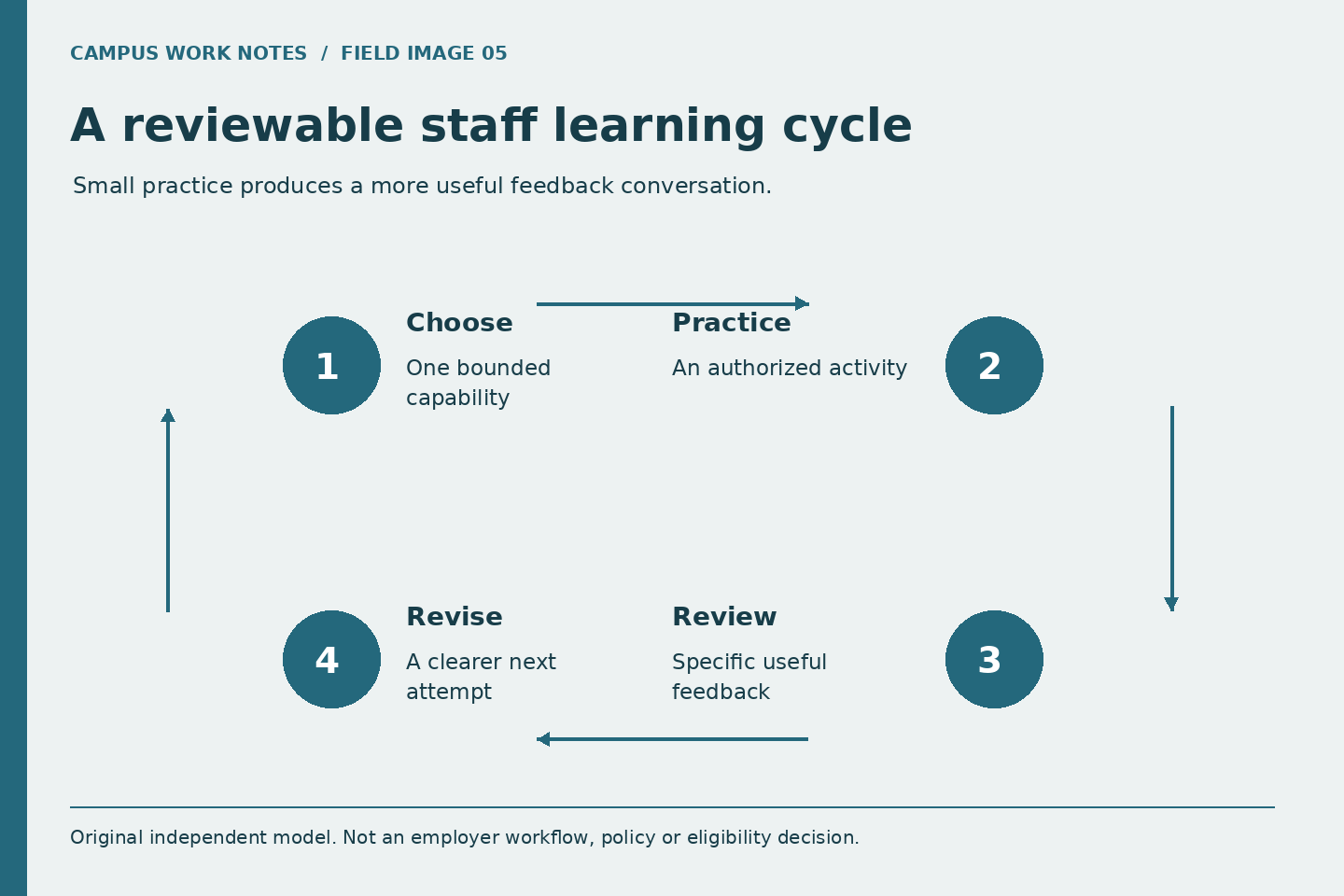
Choose one capability, one practice task and one way to check whether learning changed your work.
Define the problem before choosing a course
Professional development becomes more useful when it starts with a work problem. Tufts’ HR training page lists instructor-led virtual sessions and self-paced learning, with topics including communication and career development. A catalog gives you options; it cannot decide which capability matters most for your role. Begin with a situation you want to handle better: explaining a complex process, prioritizing competing requests, giving clearer updates or preparing for a different responsibility. Name the behavior you want to change before searching for a course title.
Write a one-sentence goal containing the capability, the setting and the evidence you will review. For example, a hypothetical employee might aim to produce clearer project updates that allow colleagues to identify decisions and deadlines without a follow-up explanation. This is a fictional planning example, not an official Tufts performance standard. It is useful because the learning can be tested in ordinary work. “Become a better communicator” is harder to practice or evaluate because it leaves the actual behavior undefined.
Pair learning with authorized practice
Choose a course or resource that addresses the specific gap, then plan a small task where you can apply it. Agree with your supervisor when the task affects team work, priorities or time commitments. The practice should fit your current authority. Learning about budget management does not authorize approving expenditure; learning a technical method does not authorize unsupervised use of equipment. A development plan is strongest when the opportunity to practice and the review responsibility are as clear as the learning activity itself.
Use a simple three-part record: what I tried, what happened and what I would change. Keep it brief enough to maintain. For the hypothetical project-update goal, the employee might test a revised structure on two routine updates and ask a colleague whether the required decisions are easy to find. They should not declare success merely because they completed the course. The course is an input; the clearer work product and useful feedback provide evidence of whether learning transferred.
Choose feedback that is specific
Ask for feedback on a defined behavior rather than on your general potential. “Was the requested decision clear?” is easier to answer than “Am I improving?” Invite one example of what worked and one change that would help. If feedback conflicts, investigate the audience and context before choosing a side. A supervisor, peer and service user may reasonably need different levels of detail. The skill is adapting responsibly, not finding one format that every person must prefer.
Tufts’ performance-development resources provide a context for discussing growth and goals, but an editorial plan should not promise advancement. Separate improving in the current role from preparing for a different one. The second goal may require additional experience, a formal qualification or an actual vacancy. Ask what evidence would make you ready for the responsibility you want, and which parts can realistically be developed now. This keeps the discussion constructive without treating participation in training as an automatic claim to a new position.
Review and decide what comes next
Set a review point suited to the practice task and the workload. At that conversation, compare the original problem with what you observed. Continue the practice if it is helping, adjust it if the setting was wrong, or choose a different resource if the course did not address the gap. Keep useful examples for a later review, but do not turn every learning moment into a burdensome reporting exercise. The plan should make work easier to improve, not create another process that consumes the time it was meant to help.
Use Keep a review record that captures work, not just busyness to retain a proportionate record of progress. One well-chosen capability practiced thoughtfully often provides a stronger foundation for growth than a long list of completed courses with no visible connection to the job.
Continue reading: Keep a review record that captures work, not just busyness, A practical role map for work at Tufts, Compare employment terms without filling gaps with guesses.